
THE DIRECTOR’S BRIEF:
The NYC Dossier – Part 1
The Mission:
3 Days. Countless attractions. Zero wasted minutes.
The Vibe:
Art. Culture. Indiana Jones meets Tomb Raider. Ancient history by day, winter village by night.
The Strategy:
The High Low approach. We cut costs on sleep to splurge on culture and dining.
The Gear:
Sony RX10 IV (Reach), Pixel 10 XL Pro (Night Sight, Super Res Zoom), Comfortable Boots (12+Miles Walked Per Day).
The Concrete Jungle (Holiday Edition)
New York City in late November is a paradox. It is simultaneously the most magical place on earth—with the Winter Village lighting up Bryant Park and the crisp autumn air cutting through the avenues—and a logistical puzzle waiting to be solved.
We didn’t go to relax. We went to consume as much art, food, and city energy as possible in four days. If you don’t have a plan, this city will eat you alive. Here is our operational report on navigating the chaos, from the “efficiency” hotels of Hell’s Kitchen to an unexpected adventure inside The Met.
Travel Smarter:
The OMNY Subway Hack
If you are still fumbling with yellow MetroCards or worrying about “Insufficient Fare” messages, stop. The NYC subway has evolved, and the math is in your favor.
The Move: Don’t buy a physical card. Just tap your phone (Google Wallet/Apple Pay) or a contactless credit card directly at the turnstile.
The Secret Weapon (The 12-Ride Cap): Here is the “Travel Smarter” win: The system automatically tracks your taps. Once you pay for 12 rides with the same device or card in a single week (Monday through Sunday), every single ride after that is 100% FREE.
The Result: We hit our 12-ride cap by Saturday morning. That meant every trip for the rest of the weekend—to dinner in Chelsea, back to the hotel, and out to the airport—cost us $0.00. It effectively turns your credit card into an Unlimited Weekly Pass, without the upfront cost.
Director’s Note
Make sure you use the same payment method for every tap (e.g., always use your phone, or always use your physical Amex). If you switch between them, the system counts them as different riders and you won’t hit the free cap!

Field Notes:
Tactics for the First-Time Visitor
New York operates on an unwritten set of rules. If you want to move like a local (and not get yelled at), keep these three things in mind:
The “Sidewalk Ballet”
Never, under any circumstances, stop in the middle of the sidewalk to check your phone or take a picture. Step to the curb (the “eddy” of the flow) to do your business. In NYC, the sidewalk is a highway; treating it like one keeps you safe.
The “Wind Tunnel” Effect
We checked the weather, saw 45°F, and thought “light jacket.” Mistake. The skyscrapers in Midtown create wind tunnels that drop the “feels like” temperature by 10 degrees. Bring gloves and a heavier coat than you think you need, especially if you plan to walk the High Line or Central Park.
The Reservation Game
As we learned at the AMNH, reservation times can sometimes be suggestions rather than rules. However, for dining (especially in Chelsea or West Village), if you are more than 15 minutes late, your table is gone. The city moves fast; honor the clock.
The LowDOWN:
YOTEL New York Times Square
(The Honest Review)
The Promise:
A futuristic, tech-forward “cabin” experience inspired by first-class airline travel.
The Reality:
A lesson in frustration.
We booked YOTEL for two reasons: Location (Hell’s Kitchen, blocks from Port Authority) and Price. But let me be clear: You are paying for the zip code, not the quality.
The Check-In Nightmare: We booked via Expedia, and despite the reservation being visible in their system, the “Mission Control” kiosks failed to pull it up. When we asked the front desk for help, they acted inconvenienced and rude. Not the start you want after a cross-country flight.
The Room: We expected small; we didn’t expect “zero privacy.” The bathroom has almost no separation from the bed. Worse, there were spots of mold in the shower and sink area, and the TV had frayed wires hanging out the back.
The “Robot” Gimmick: YOTEL is famous for its luggage-storing robot. Spoiler alert: It broke. Both times. We waited over 30 minutes to retrieve our bags before a flight because the manager “opened a ticket” that the engineer never received.
The Redeeming Factor: Shout out to the two “Ground Control” team members on the floor. They were the only helpful humans in the building.
The Verdict: 2.5/5 Great location, terrible execution.
The Museum Marathon
We dedicated a full day to culture, splitting it between two giants – The American Museum of Natural History and The MET. The contrast couldn’t have been sharper.
Tech Spotlight:
The “Invisible Glass” Hack
Museum photography usually has one major enemy: Glare. You line up the perfect shot of a rare Egyptian artifact or a diorama, and all you see is the reflection of the exit sign behind you. This is where the Pixel 10 XL Pro feels like cheating.
I used the phone’s AI-powered Reflection Removal tool (part of the Magic Editor suite) on almost every shot at the AMNH and The Met. It didn’t just “blur” the reflections; it intelligently analyzed the image and scrubbed the glare entirely, reconstructing the details underneath.
The Result: My photos of the dioramas look like I was standing inside the case, with zero barrier between the lens and the subject. It turns a throwaway “tourist snap” into a clean, archival image instantly.


American Museum of Natural History
We started uptown. While the general vibe can feel a bit “elementary school field trip” (strollers are everywhere), the specific exhibits we targeted were absolutely worth the crowd navigation. We opted for the Ticketed Exhibitions add-ons, and I highly recommend doing the same to elevate the experience.

The Heavy Hitters (Dinosaurs): You don’t go to the AMNH without paying respects to the Hall of Saurischian Dinosaurs. Standing under the massive 4-foot jaw of the T-Rex—mounted in a stalking pose rather than the old upright “Godzilla” stance—gives you a primal sense of scale you can’t get from a book. The Stegosaurus in the Ornithischian Hall was equally impressive. These aren’t just bones; they are architectural marvels of nature.
The Add-Ons: We escaped the cold by booking the Davis Family Butterfly Vivarium. It’s a humid, tropical enclosure with 80 species flying freely around you—a photographer’s dream if you have a fast shutter speed. We also hit the Hayden Planetarium for the Space Theater show. It’s a visual spectacle that makes you feel incredibly small in the best way possible.
The Hidden Gem: The Mignone Halls of Gems and Minerals caught us off guard. This isn’t a dusty collection of rocks; it’s a vault of glowing geodes and massive crystals that look like they belong on another planet.
The Skip: We bypassed the Solomon Family Insectarium. It was swarming with kids. Unless you really love bugs, your time is better spent elsewhere.
Travel Smarter Tip
The “Fast Pass” Loophole: We purchased tickets with specific reservation times for the Butterfly Vivarium and the Planetarium, expecting a rigid schedule. The Reality: The staff didn’t seem to enforce the specific entry windows. We were able to flow from one attraction to the next without waiting around, allowing us to clear the major highlights much faster than the itinerary suggested. Your mileage may vary, but don’t stress if you’re 15 minutes early.


Central Park
(West to East Expedition)
To bridge the gap between the Natural History Museum (West 81st) and The Met (East 82nd), we didn’t just call an Uber. We walked the 79th Street Transverse route, which cuts through the most cinematic section of the park.

The Checkpoint:
Bow Bridge
The History: This isn’t just a walkway; it’s a Victorian masterpiece. Built in 1862 by Calvert Vaux and Jacob Wrey Mould, it is the second-oldest cast-iron bridge in America. It was designed to resemble an archer’s bow—hence the name.
The Scene: We caught a quintessential New York moment here: a canoe drifting on the still water of The Lake, framed by ancient trees dropping leaves, with the rigid Manhattan skyline rising in the background. The fall foliage was peaking, creating a natural vignette that felt like a movie set.
The Route Highlights
The Great Lawn: As you walk east, you pass this massive green expanse. Fun Fact: This used to be a reservoir. It was filled in during the 1930s with rubble excavated from Rockefeller Center. Now, it’s the city’s backyard.
Belvedere Castle: Perched on Vista Rock (the second-highest natural point in the park), this miniature castle offers the best high-angle view of the park. It’s worth the quick climb if you have the legs for it.
The Obelisk (Cleopatra’s Needle): Right before you hit The Met, look for the ancient Egyptian obelisk. It’s the oldest outdoor monument in NYC (3,500 years old)—a perfect teaser for the Egyptian wing you are about to see inside the museum.


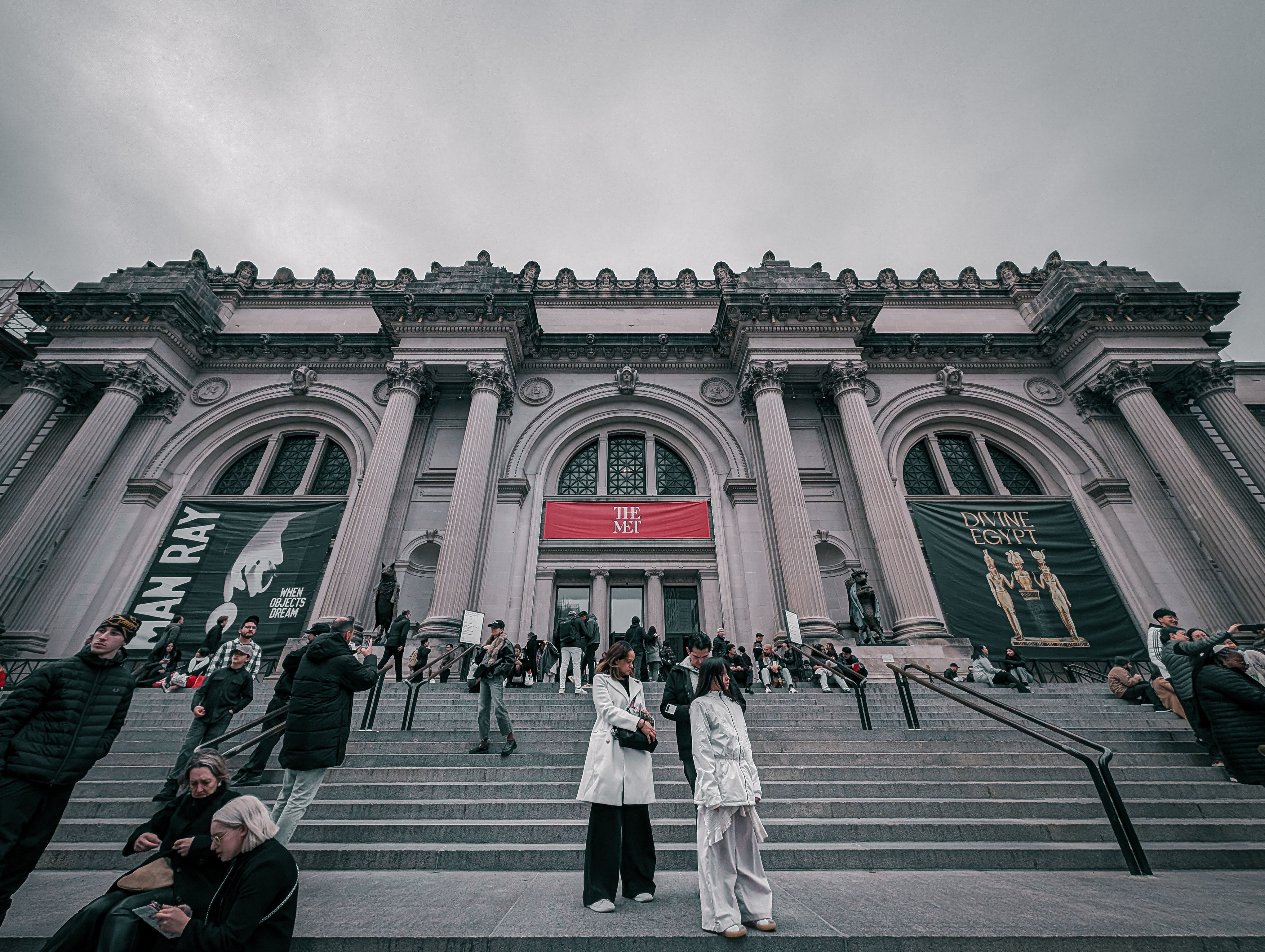
The Metropolitan Museum of Art (The Met)
We arrived at The Met in the afternoon, and purely by coincidence, we stumbled into “Date Night at The Met.” This is when the museum transforms from a tourist attraction into a cultural event.

The “Tomb Raider” Moment (Egypt):
As a huge fan of Ancient Egypt, the “Divine Egypt” exhibition was a religious experience. The exhibit didn’t just show statues; it explained how the Gods were worshipped and perceived, giving context to the stone faces.
The Highlight: Standing in the Temple of Dendur is impressive by day, but we returned after sunset. Seeing the temple illuminated against the dark glass wall, with the night sky of Central Park visible behind it, felt less like a museum and more like an immersive level of Tomb Raider.
Note: The “Divine Egypt” exhibit closed in mid-January 2026, so check the Met website for the current blockbuster rotation.


The Classics: We spent a good amount of time in the Arms and Armor galleries (the craftsmanship on the medieval suits is mind-blowing) and the Greek and Roman Art wings. The scale of the statues here feels heroic.
The Miss: I have to be honest—some of the fine art galleries felt a bit “stuck up” and overly serious for our vibe. We also missed out on the Japanese Art wing, which was closed, so we didn’t get to see The Great Wave off Kanagawa. A massive regret, but a reason to return.


Dining at The Met: The Honest Truth
We grabbed a bite at the Petrie Court Café because we were starving.
The Review:
It was overpriced and underwhelming. You are paying for the view of the sculpture garden, not the food. It was, however, a great people watching spot and a well-deserved break from walking.
The Better Move:
Once “Date Night” kicked in (Friday/Saturday evenings), we went to the Balcony Bar above the Great Hall. We grabbed cocktails, leaned over the railing, and listened to a live string quartet play while looking down at the crowds entering the museum. That was the moment the trip went from “good” to “unforgettable.”

The Holiday Markets:
Bryant Park Winter Village
We skipped the knick-knack shops and went straight for the food stalls. The Winter Village is a sensory overload in the best way possible, but you need a strategy.
The Must-Have: We tracked down a specific hot chocolate vendor (look for the long line, it’s there for a reason) that offers a hand-torched marshmallow add-on.
The Experience: You pick your marshmallow flavor (vanilla, peppermint, etc.), and they torch it right in front of you with a culinary blowtorch until it’s golden brown and gooey. It’s basically a drinking s’more. Watching the flame hit the sugar in the freezing cold air? Pure holiday magic.
The Warning: Do not treat this as a “late-night” snack stop. We arrived in the evening expecting full service, but were surprised to find many of the popular food vendors either sold out of key items or closing up shop early.
Pro Tip: Treat the Holiday Markets as a lunch or early dinner destination (around 4:00 PM). You get the golden hour light for photos, the food is still fresh, and you beat the post-work rush. By 8:00 PM, you’re mostly left with ornaments and empty trays.
The Resource Locker:
Key Links & Intel
Don’t just wing it. Here are the official tools we used to build this itinerary:
The Culture:
The Metropolitan Museum of Art: Check the “Exhibitions” tab for current rotations (like the Divine Egypt exhibit we saw).
Date Night at The Met: Verify Friday/Saturday timings and musical guests.
American Museum of Natural History: Book your “Ticketed Exhibitions” (Butterfly Vivarium/Planetarium) here in advance.
The Logistics:
MTA “OMNY” Info: Details on the “12-ride free” weekly cap.
YOTEL New York Times Square: (Book with caution, or strictly for location).
Bryant Park Winter Village: Check vendor opening times so you don’t miss the food.
The After-Action Report
New York isn’t a vacation you take to relax; it’s a challenge you take to be energized. Our “High/Low” strategy was the key to unlocking the city without breaking the bank. By tolerating the tight quarters of a budget hotel, we freed up the resources to dine on braised beef in Chelsea and sip cocktails in an Egyptian temple.
The city rewards preparation—knowing about the OMNY cap, the museum “Date Nights,” and the hidden photo spots—but it also demands flexibility. The robot might break, and the room might be small, but when you’re watching the steam rise off a torched marshmallow in Bryant Park, none of that matters. You’re just happy to be in the center of the world.
Join the Debrief
That was Part 1 of our read on the city, but New York changes every week.
Have you survived a stay at a “Micro-Hotel” like YOTEL?
What is your “One Meal” that you have to eat every time you visit NYC?
Drop your tips, warnings, or favorite photo spots in the comments below. Let’s build a better itinerary together.
Leave a Reply